

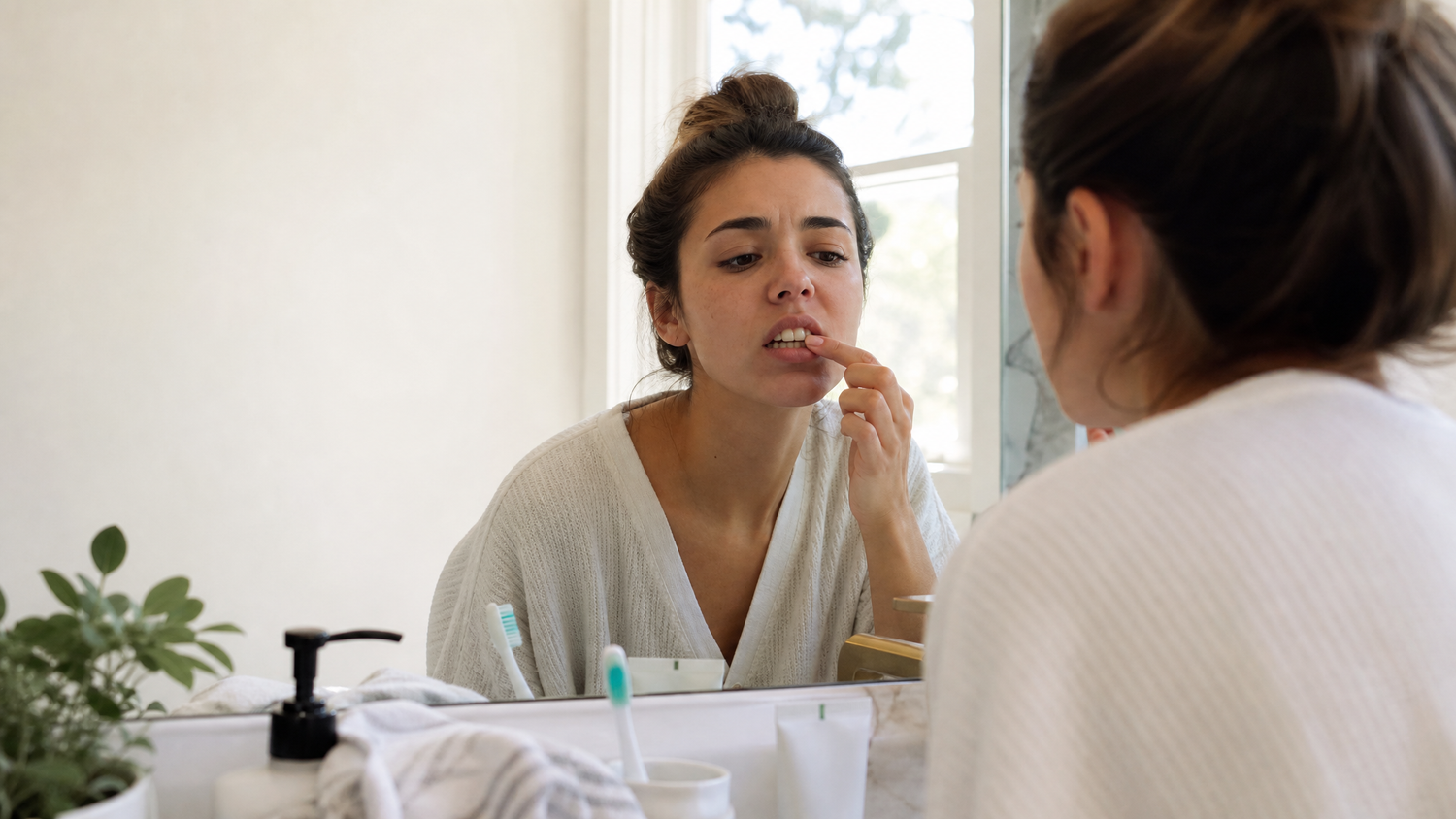
Why brushing can miss food between teeth
A toothbrush is the foundation of daily care. It helps clean the tooth surfaces you can see and the chewing surfaces at the back. But the bristles cannot consistently clean the narrow contact areas between teeth. The American Dental Association recommends daily between-teeth cleaning because leftover food and plaque can remain there after brushing.

That does not mean you need to scrub harder. Brushing aggressively can irritate your gums and still will not turn a toothbrush into an between-teeth cleaner. A better approach is to pair normal, gentle brushing with a tool made for the spaces in between.

What should you use after brushing?
| Tool | What it is best for | What it does not replace |
|---|---|---|
| Toothbrush | Daily cleaning of the visible tooth surfaces and gumline | Cleaning between teeth |
| String floss | Wiping the sides of two teeth where they touch | Regular brushing |
| Interdental brush | Open spaces between teeth, where a dentist says the size is appropriate | Regular brushing |
| Water flosser | Rinsing food from between and around teeth; a practical option if hand flossing is difficult | Regular brushing or professional dental advice |
| Mouthwash | A helpful add-on for some routines, including fresh breath | Brushing and cleaning between teeth |
For most people, consistency matters more than finding one “perfect” tool. Classic string floss works well for many people. If it is difficult to use—because of braces, a bridge, limited dexterity, or simply a routine you never stick with—ask your dentist which interdental tool makes sense for you. The ADA notes that water flossers can be an option when flossing by hand is difficult; interdental brushes may also be appropriate for some spaces.

A simple routine for food that keeps getting stuck
- Brush gently for two minutes, twice a day. Use a soft toothbrush and fluoride toothpaste, in line with the ADA’s general oral-health recommendations.
- Clean between your teeth once a day. Use floss, an interdental brush, or a water flosser—choose the method you can use thoroughly and comfortably.
- Use mouthwash as an extra, if it fits your needs. It can be useful in a routine, but the ADA states that mouthrinse does not replace brushing and flossing.
- Do not use improvised sharp tools. Fingernails, pins, forks, and similar objects can hurt your gums or damage dental work.
If food gets stuck after a meal, you do not need a full second brushing session. A quick, gentle between-teeth clean is usually the more targeted move. If you use floss, guide it in with a light rubbing motion—do not snap it down into the gums. If you use a water flosser, follow the device instructions and let the water do the rinsing rather than pressing the tip into your gums.

When one spot keeps catching food
Occasional trapped food is normal. But if the same area catches food repeatedly, or you notice pain, swelling, bleeding, a bad taste, or a loose filling, make a dental appointment. A dentist can check the area and recommend the right cleaning method for the shape of your teeth and any dental work you have.
Make the between-teeth step easier to keep
The best routine is the one that survives a busy morning, a workday lunch, and travel. If string floss is the part you regularly skip, keeping a compact water flosser nearby can make that step feel more realistic. Bixdo Glossonic Flosser Go is a compact water flosser designed for between-teeth cleaning on the go. It is an option to consider alongside brushing and the personalized guidance of your dentist—not a replacement for either.



Leave a comment
This site is protected by hCaptcha and the hCaptcha Privacy Policy and Terms of Service apply.