

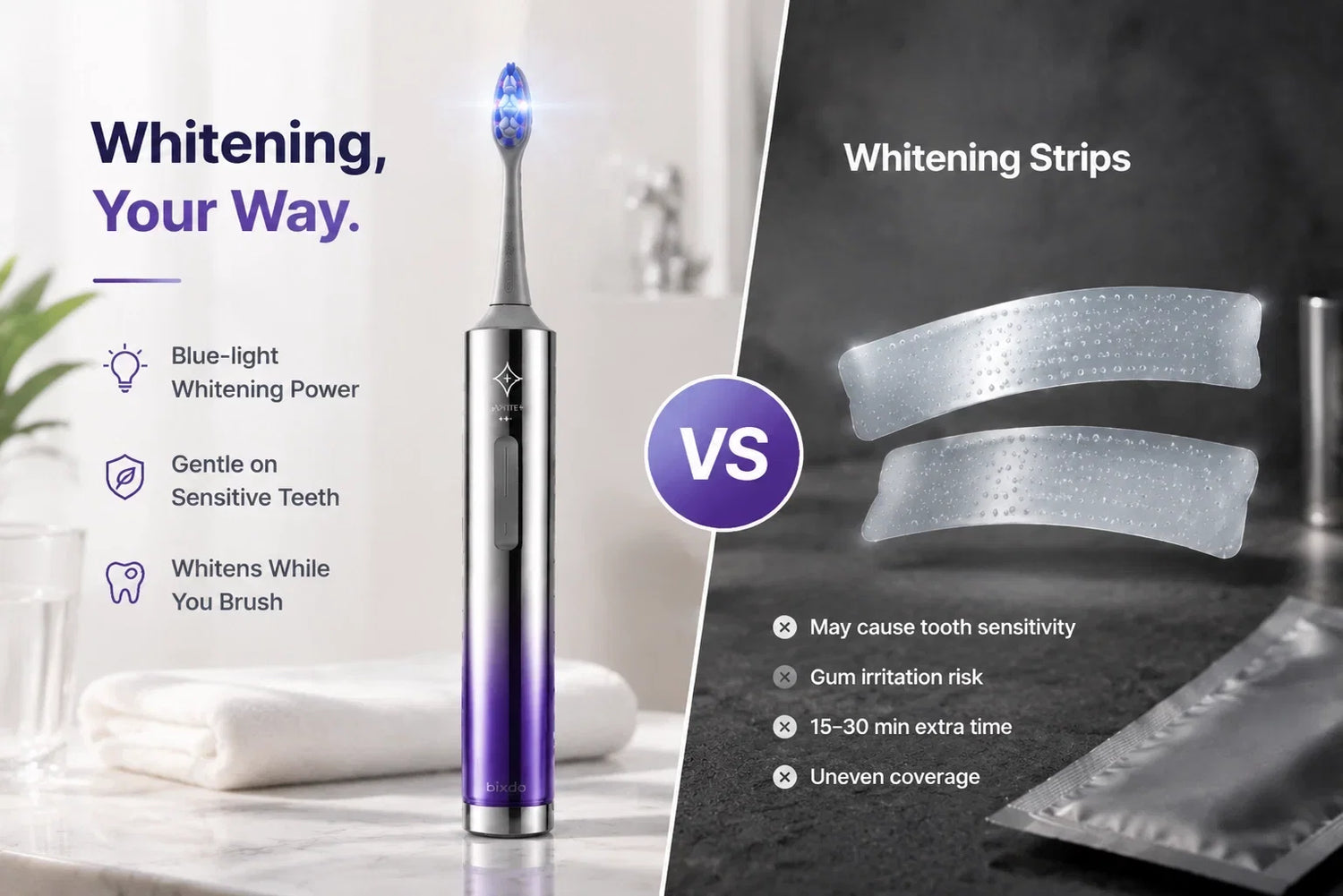
Whitening strips are one of the most popular at-home solutions for removing coffee, tea, and wine stains. They are convenient and can deliver visible whitening results quickly.
However, many people stop using whitening strips because of common concerns:
- Tooth sensitivity after whitening
- Gum discomfort caused by whitening gel
- Extra 15–30 minutes required for each treatment
- Uneven whitening results due to poor strip coverage
This leads to a common question:
Can a blue-light whitening toothbrush replace whitening strips while providing a more comfortable whitening experience?
The answer depends on your whitening goals.
While whitening strips may provide faster visible results, a blue-light sonic toothbrush offers a more convenient daily approach by combining brushing, stain removal, and whitening support in one routine.
Important note: This article provides general oral care information only. If you experience persistent tooth pain, severe sensitivity, or exposed roots, consult your dental professional before starting any whitening routine.
How Traditional Whitening Strips Work — And Why They Can Cause Sensitivity
Most whitening strips use peroxide-based whitening ingredients, such as hydrogen peroxide or carbamide peroxide.
These ingredients work by breaking down stain molecules within the tooth structure, helping reduce discoloration caused by coffee, tea, wine, and other foods.
Although effective, peroxide-based whitening may cause temporary sensitivity for some users.
Common concerns include:
Tooth sensitivity
Some users experience sharp sensations after whitening because peroxide can temporarily affect the tooth structure and increase sensitivity, especially for people with thin enamel or exposed dentin.
Gum irritation
Whitening gel that contacts the gum tissue may cause temporary irritation or discomfort.
Extra treatment time
Unlike normal brushing, whitening strips require an additional daily step. Most treatments require wearing strips for around 15–30 minutes.
Uneven whitening coverage
Because strips need to fit the shape of your teeth, some areas may receive less whitening, especially with crowded or uneven teeth.
Even whitening products designed for sensitive teeth may still cause occasional discomfort for certain users.
How Bixdo Glossonic Blue-Light Whitening System Works
The Bixdo Glossonic Brush Pro combines:
- 460nm blue-light technology
- Peroxide-free PAP whitening formula
- Sonic cleaning technology
- Light-guiding brush head design
Unlike traditional whitening strips, blue light itself does not directly bleach teeth.
Instead, the blue-light technology helps activate the PAP whitening formula while you complete your normal 2-minute brushing routine.
The light-guiding brush head helps distribute blue light across tooth surfaces, while sonic vibration assists in removing surface stains caused by daily foods and drinks.
Why PAP Whitening Is Different From Peroxide Whitening
Traditional peroxide whitening works by using bleaching ingredients that penetrate deeper into the tooth structure.
PAP (Phthalimidoperoxycaproic Acid) is a peroxide-free whitening ingredient designed to target stain molecules while avoiding peroxide-based bleaching.
This makes PAP an attractive option for people who want a gentler whitening experience.
With the Bixdo Glossonic Brush Pro:
- Whitening happens during your normal brushing routine
- No additional whitening treatment time required
- Peroxide-free PAP formula helps reduce the risk of common sensitivity issues
- Soft rounded-tip bristles provide comfortable brushing
- Daily cleaning and whitening support are combined into one routine
Can It Fully Replace Whitening Strips? Honest Comparison
| Item | Whitening Strips (Peroxide-Based) | Bixdo Glossonic Brush Pro |
|---|---|---|
| Whitening speed | Faster visible changes within days | Gradual brightening with consistent daily use |
| Whitening technology | Peroxide-based bleaching ingredients | PAP peroxide-free whitening system |
| Sensitivity concern | Higher chance of temporary sensitivity | Designed for a gentler whitening experience |
| Extra time needed | Requires 15–30 minutes of separate treatment | No extra time — works while brushing |
| Comfort | Whitening gel may contact gums | No whitening strip or gel residue |
| Coverage | Depends on strip fit and tooth alignment | Covers areas you normally brush |
| Best suited for | Short-term whitening results | Daily whitening maintenance and sensitive users |
Conclusion:
If your goal is the fastest possible whitening result within a few days, professional whitening treatments or stronger whitening systems may provide quicker results.
However, for people who want a convenient daily whitening routine, experience sensitivity from whitening strips, or prefer gradual smile maintenance, the Bixdo Glossonic Brush Pro can be a practical alternative to repeated whitening strip use.
It helps remove daily surface stains from coffee, tea, and wine while supporting a brighter smile through consistent brushing.
Who Will Benefit Most From Switching Away From Whitening Strips?
Bixdo Glossonic Brush Pro may be a good choice if you:
- Experience tooth sensitivity after using whitening strips
- Feel gum discomfort from whitening gel
- Do not want to spend extra time on whitening treatments
- Have mild tooth sensitivity or early gum concerns
- Want to maintain a brighter smile every day
Practical Tips for Better, Low-Irritation Whitening With Glossonic
For a more comfortable whitening experience:
Use gentle brushing pressure
Let the sonic technology do the cleaning. Pressing harder does not improve whitening results and may increase gum irritation.
Start with a lower intensity mode
If you have sensitive teeth, begin with a lower vibration setting and gradually adjust based on comfort.
Use PAP whitening toothpaste
For the best blue-light activation experience, pair the brush with compatible PAP whitening toothpaste. Standard toothpaste may not provide the same whitening activation effect.
Replace your brush head regularly
Replace the light-guiding brush head approximately every 3 months to maintain cleaning performance and light transmission.
Pay attention to sensitivity
If you experience ongoing discomfort, pause whitening use and consult your dental professional.

Leave a comment
This site is protected by hCaptcha and the hCaptcha Privacy Policy and Terms of Service apply.